
English for children and teenagers. Groups of up to five.
We adapt lessons to the child’s age and level. There is time for questions, short conversations and written exercises.
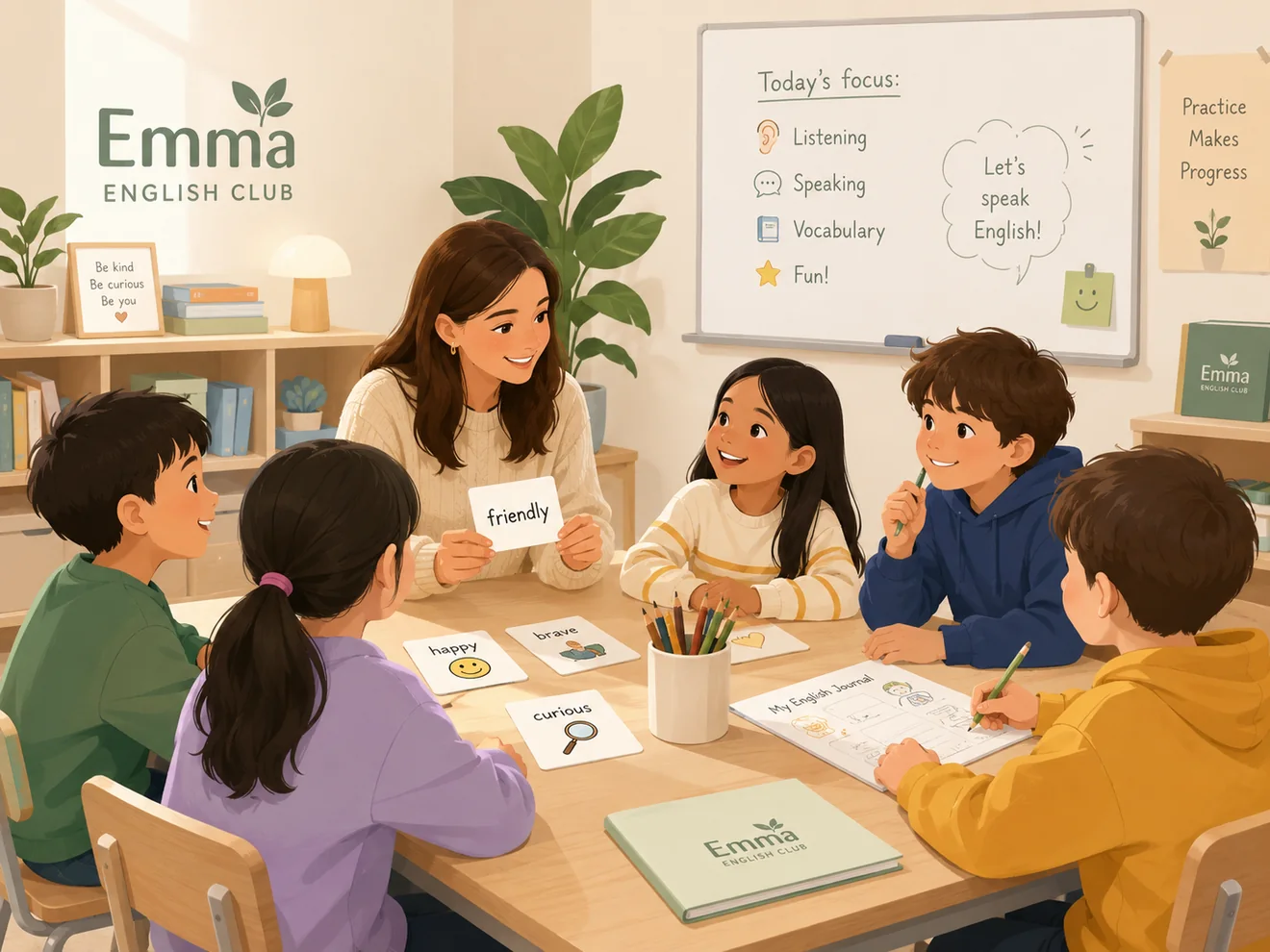
What does your child need?
School has lots of material and not enough speaking.
Your child knows the rules but needs more active language.
Another worksheet is a hard sell.
If a class is mostly filling in gaps, children get little chance to use the words they know.
You want your child to speak, too.
We practise asking questions, telling someone about the day and finding another way to say something when a word is missing.
Classes by age and level
English for kids
Language games, short conversations and activities where each child has something to say.
English for teens
More conversation, real-life topics and the language teenagers need outside the classroom.
Speaking & confidence
For children who understand a lot but are reluctant to speak English.
School support
We revisit difficult school topics and practise using them in conversation.
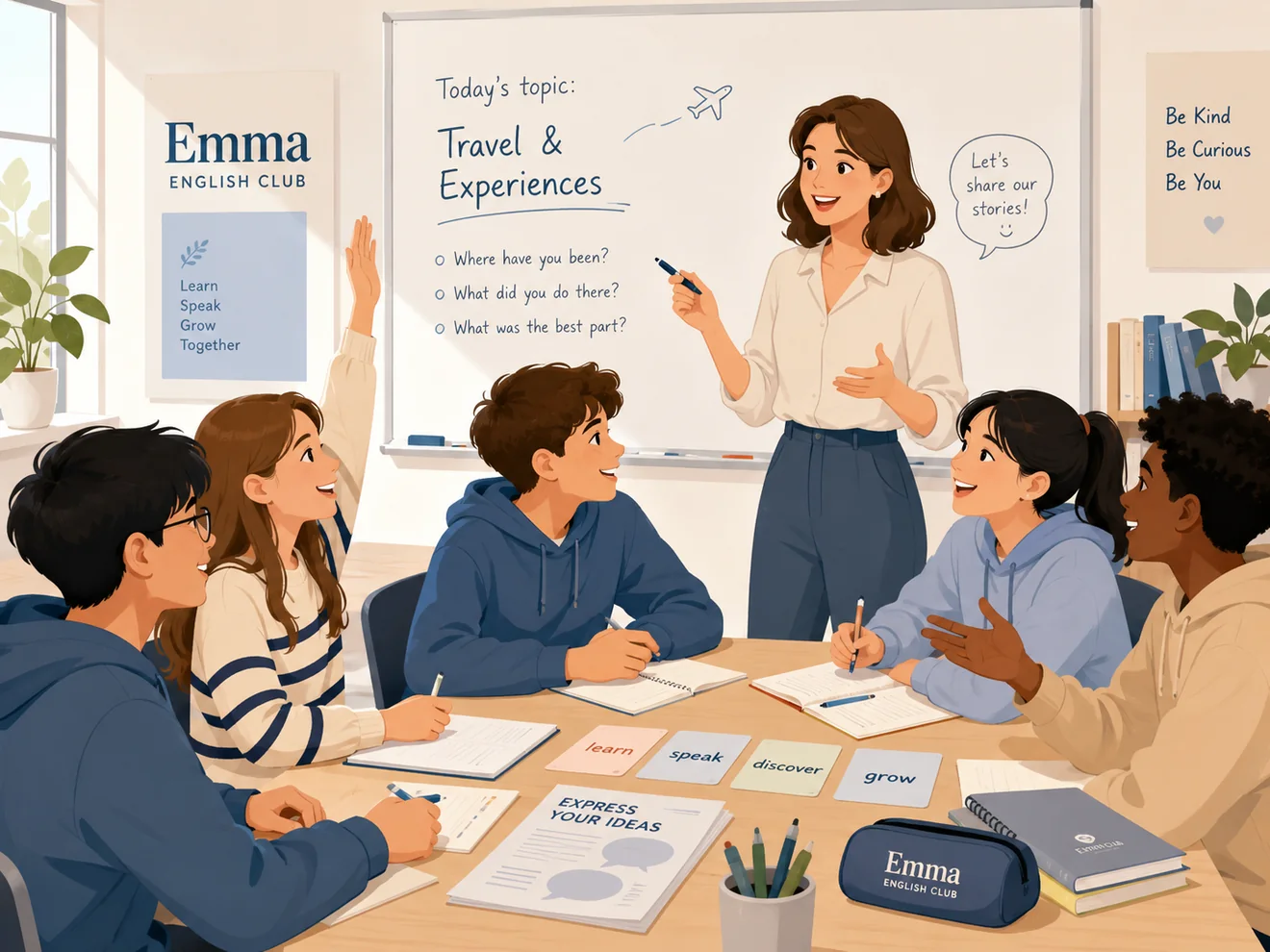
Topics teenagers want to talk about.
We work differently with teenagers than with younger children: more discussion, personal opinions, projects and situations from travel, school and everyday life. The goal is for English to stop feeling like just another subject.
Why a small group helps
In a group of no more than five, the teacher can see who needs another explanation and who is ready for a harder task.
- small groups and lots of active participation
- topics and tasks adapted to age
- conversation, shared tasks and answers in the child’s own words
- regular contact with parents about progress and direction
What happens in class
Small-group conversations
Every learner has time to ask and answer.
Games with a purpose
Games provide useful speaking practice.
Age-appropriate topics
A ten-year-old and a teenager need different conversations.
Updates for parents
Know what the class covered and what needs practice.